Changes in complement structure from Classical to Byzantine Greek
The post below was originally published in 2017. It was among a large number of posts that were lost for several years, and I recently recovered it. I have added a brief comment below after the republished post.
 In the first issue of the Journal of Greek Linguistics of 2017, Klaas Bentein examined changes in the way verbal complements were formed between the Classical and Byzantine periods. Here’s what the abstract of his paper says:
While Classical Greek has a particularly rich complementation system, in later times there is a tendency towards the use of finite complementation. In this context, Cristofaro (1996) has claimed that the Classical opposition whereby the accusative and infinitive is used for non-factive complements, and ὅτι with the indicative and the accusative and participle for factive ones, is disappearing, ὅτι being used as a ‘generic’ complementiser. In this article, I investigate to what extent Cristofaro’s (1996) claim of the pragmatic neutralisation of complementation patterns can be upheld, and whether it could be claimed that a new pragmatic opposition, in terms of ‘register’, is being established. For this purpose, I turn towards documentary papyri, a corpus which is particularly fruitful for socio-historical investigations.
You can read this article here here. I have added it to the Comprehensive Bibliography of Hellenistic Greek Linguistics.
The title of Bentein’s article is “Finite vs. non-finite complementation in Post-classical and Early Byzantine Greek: Towards a pragmatic restructuring of the complementation system?”
What he calls “complement structure” is referred to as “argument structure” in other theoretical frameworks and “case frames” in still others. These two alternative models both place a strong emphasis on the relations of these complements to the verb with which they appear.
Two Items Added to the Bibliography
 Today I added two items to the bibliography at Greek-Language.com. One was a paper by Paul Danove that has been around since 2013, but I have failed to add it. My apologies to Paul!
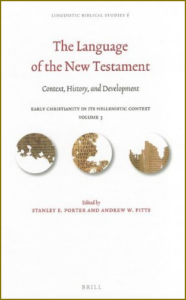
Danove, Paul, ‘A comparison of the usages of δίδωμι and ἀποδίδωμι compounds in the Septuagint and the New Testament’ in Stanley E. Porter and Andrew W. Pitts (eds), The language of the New Testament: Context, history and development Linguistic Biblical Studies 6, Leiden: Brill, 2013. 365–400.
The second is a paper published in the Transactions of the Philological Society in 2017. Dr. Stolk provides a well-reasoned look at prepositions (mostly πρός and εἰς) and the usage of the dative and accusative cases in phrases without a preposition. She challenges the widely accepted notion that increased use of these prepositions caused the eventual decline of the dative case.
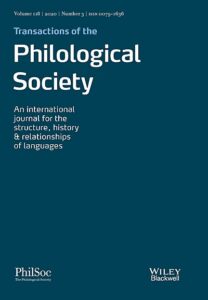 Stolk, Joanne, “Dative Alternation and Dative Case Syncretism in Greek: the use of dative, accusative and prepositional phrases in documentary papyri.” Transactions of the Philological Society. Volume 115:2 (2017) 212–238.
Transliteration versus Translation
A number of highly important words in translations of the Bible are in fact not translated at all, but merely transliterated. A translation is a rendering of the meaning of a text into a different language. A transliteration does not render the meaning of the word into the other language, but only represents its sound. βασιλεύς, for example, can be translated into English as king. Transliterated into English, it would be Basileus.
Clearly, transliterating this word into English would not make its meaning clear. It would, in essence, hide the meaning and give us a new English word, which we would then have to explain to readers of the text. This is exactly what happened with quite a few theologically important words in the earliest English translations of the Bible. Rather than translating them into English, the earliest translators chose to transliterate them, representing their sound rather than their meaning in English. In most cases, these transliterations were accepted by the churches of the time and became traditional usage in the new languages into which the Bible was translated, with the church providing new “official” meanings for these words.
Four examples of such transliteration still found in our modern English Bibles are shown below.
| Original Language Word | Translation | Transliteration |
|---|---|---|
| βαπτίζειν | dip, wash, rinse | baptize |
| χριστός | anointed | Christ |
| מַשִׁיחַ | anointed | Messiah |
| χριστιανός | of the party of the anointed | Christian |
Why do you think the earliest translators chose not to translate these word, but to transliterate them? What could happen if we chose now to actually translate them rather than continuing to use the transliterations given to us by those early translators?
Ἐγὼ μὲν ὑμᾶς βαπτίζω ἐν ὕδατι εἰς μετάνοιαν (Matthew 3:11)
I dip you in water for repentance
I wash you with water for repentance
I rinse you with water for repentance
At the very least, in the case of βαπτίζω, we would have to think very hard about which English word best represents the sense of the Greek word in each particular context. Continuing to use the transliteration baptize hides this problem from us
BICS, CALP and what they mean for Acquiring Ancient Greek
I recently gave a presentation to a group of parents of school children enrolled in Chatham County Schools’ English Language Acquisition program. They wanted to know how children qualify for help acquiring English, how the program works once they qualify, how they exit the program when their English is good enough, etc. In answering that last questions, I addressed something that I have long wanted to write about in regards to ancient language acquisition–particularly acquiring Ancient Greek. So… here we go.
BICS and CALP

In 1979 Jim Cummins, professor at the University of Toronto, coined these two acronyms to distinguish between two very different levels of language competence observed in students acquiring English.
BICS means Basic Interpersonal Communicative Skills, while CALP is an acronym for Cognitive Academic Language Proficiency, now commonly referred to simply as Academic Language Proficiency. Cummins observed, along with others working in applied linguistics, that students rapidly reach the ability to converse with their peers and even do a reasonable job of functioning at school and sounding fluent, but their academic performance often lagged far behind their native speaking companions.
The distinction between BICS – acquired rapidly through oral interaction – and CALP – which requires considerable effort and much more time to acquire – has stood the test of time, remaining a fundamental distinction in studies of modern language acquisition. Since Cummins’ initial proposal the distinction has been applied not only to the acquisition of an additional language beyond the one developed as a child. It can even apply to monolingual speakers of English (Spanish, German, or any other present-day language.).

Almost everyone, absent a major cognitive impairment, acquires BICS. This is the language of everyday life, the way children talk to each other and to their parents and the way adults speak to each other in day to day conversation. BICS is all that is necessary for many jobs, for example. You can wash cars, work at a fast-food restaurant, gather crops, and perform many other jobs without the need of much academic language. As we all know, though, these are the lower-wage jobs.
If you want to work in a more demanding and higher paying setting, you generally need CALP. If you interview for a job as a Finance Manager, BICS will usually not be enough. The only jobs available to you at an institution of higher education if you only have BICS are the service jobs. Certainly prejudicial attitudes play into this, but no matter the race or ethnicity of the applicant, Professor, Department Chair, President, IT Specialist simply don’t go to applicants without CALP. It has to do with your ability to do the job. You need CALP for sophisticated and highly technical enterprises.
So What?
What does this distinction have to do with acquiring Ancient Greek?
For generations Ancient Greek was taught almost exclusively through memorization of forms, paradigms, and lists of vocabulary. Nobody ever learns or learned real fluency that way, but a fair number of gifted students managed to acquire the ability to read Ancient Greek texts with the aid of a good lexicon and a reference grammar. An embarrassingly large percentage of students never even managed this rather limited ability. Nobody, not even those gifted students, could develop BICS in this manner, much less CALP.
Thankfully, that is changing. Some magnificent work is being done to teach Ancient Greek in Ancient Greek, with students actually acquiring the ability to speak the language as well as read it without the need of frequent reference to a lexicon or grammar. This work was pioneered by Randall Buth who founded the Biblical Language Center in Israel more than two decades ago.
It is in this new context that I wish to address the question of BICS and CALP. Scholars have long recognized the variety of language registers embedded in the Greek New Testament. Reading Mark’s Gospel is an experience quite unlike reading Luke-Acts, for example. While slogging through Mark after only one year of elementary Greek is a possibility, making it through Luke, Acts, or Hebrews is not. The authors of these last mentioned documents wrote with a variety of vocabulary and sentence structure much more demanding than most of the rest of the New Testament. They had Ancient Greek’s version of CALP.
The ability to speak fluently in Ancient Greek will not insure an understanding of that register of Ancient Greek literature, though it is certainly a good start. To produce CALP, listening and speaking in class must move beyond conversational fluency to include both reading and writing with high standards.
This is a self-criticism, by the way. I have a long way to go before even being conversationally fluent in Greek. I am bilingual and biliterate—able to understand what I hear, make myself understood in speech like a native, read with understanding, and write at a reasonably high level in both English and Spanish—but I only read Ancient Greek. I hope to change that.
Resources are becoming more and more available to help with this goal. I discovered this week Seumas Macdonald’s Ἡ Ἐλληνικὴ γλῶσσα καθ᾿ αὑτὴν φωτιζομένη (aka) Lingua Graeca Per Se Illustrata. What a gift to the world of Ancient Greek students! It’s released with a CC BY-SA 4.0 license!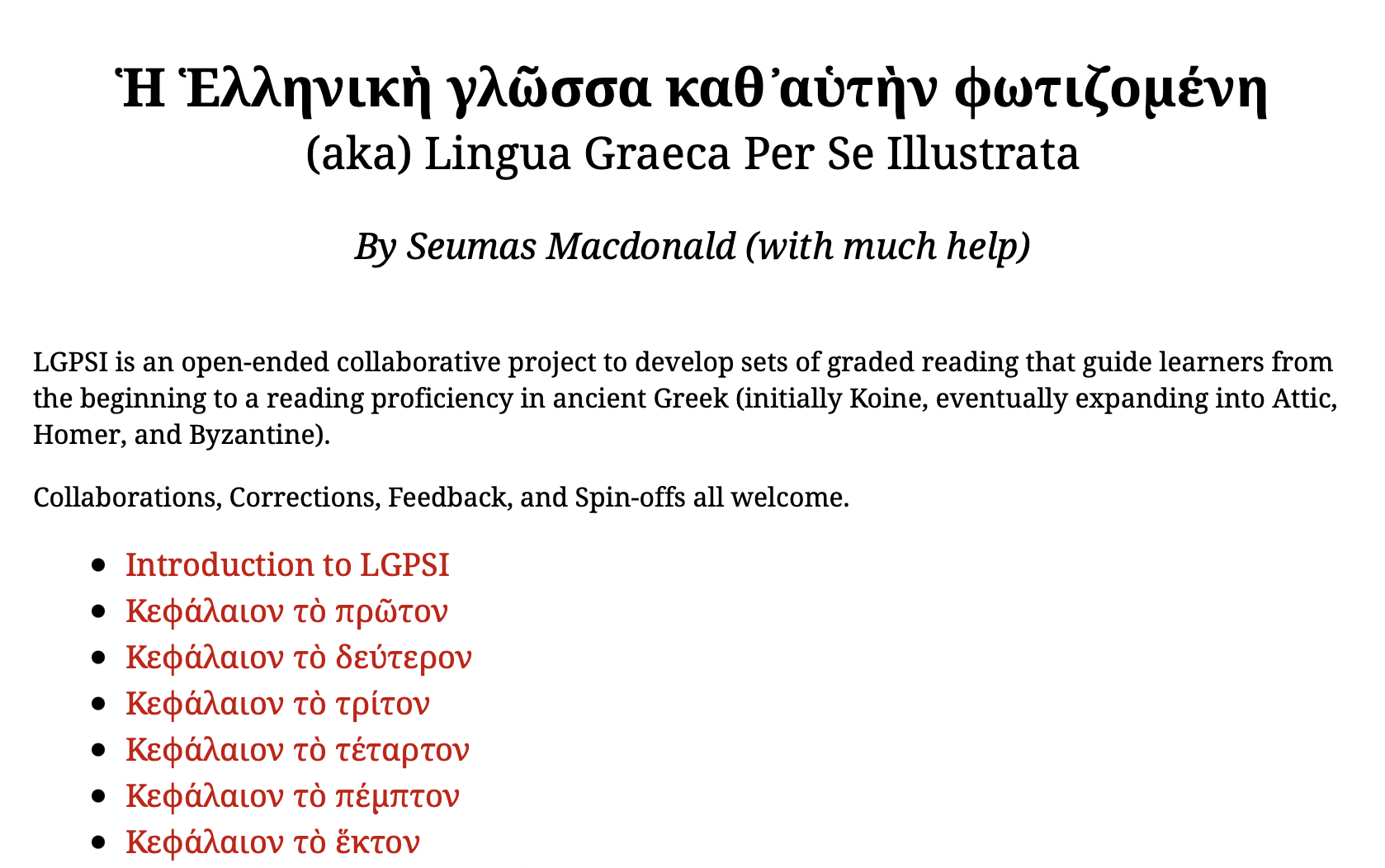
As Seumas himself acknowledges, the work is not ready to use as a stand-alone tool for teaching yourself Ancient Greek, but it certainly is a major help for anyone already started on that learning journey and looking for some good reading practice that doesn’t require reference to English explanations. I can also envision how it could be incorporated into an in-person learning experience with the teacher using the communicative method. Have the students read each chapter of Seumas’ work, then discuss it in class in Greek. This would require a good bit of preparation on the teacher’s part, but it would be worth it!
Another great resource available online—this one not free unfortunately—is Biblingo. The four and a half minute video below gives an overview of the method and its goals. Whether or not you agree with the theology that drives their work, the method is what is of interest here. The video is an ad, but you can get an idea of how the program works.
The course includes audio and video and requires the user to write in Greek, beginning with very simple structures and increasing in complexity as you advance through the course. This also could be adapted for use in a classroom setting, having students complete lessons on their own, and designing communicative classroom experiences to take advantage of what they have learned.
Another online course with a good bit of material already developed is Benjamin Kantor’s work at KoineGreek.com in association with the Biblical Language Center. You can see his introductory video below to get an idea of what to expect.
All of these online resources represent a great step forward in terms of fluency. Other programs that can accomplish the same, such as the Polis Institute and one of the options at the Biblical Language Center, use the communicative method in particular locations requiring travel to the course location site.
I am unable to travel to those sites, but I’m excited to see the communicative method showing up increasingly in online resources. My own personal goal goes well beyond oral fluency (BICS) to include the ability to read and write the way I can in English and Spanish (CALP). That requires, in addition to working on oral fluency, reading roughly contemporary works outside the canon, reading to learn rather than just learning to read.
Maybe one day I’ll get there. But there will always be more to learn.
If you are learning Ancient Greek using the communicative method, please feel free to comment telling us what you are using and where you are studying.
Mike Aubrey’s Masters Thesis
Originally published on December 31, 2014
Mike Aubrey has uploaded his anxiously awaited thesis:
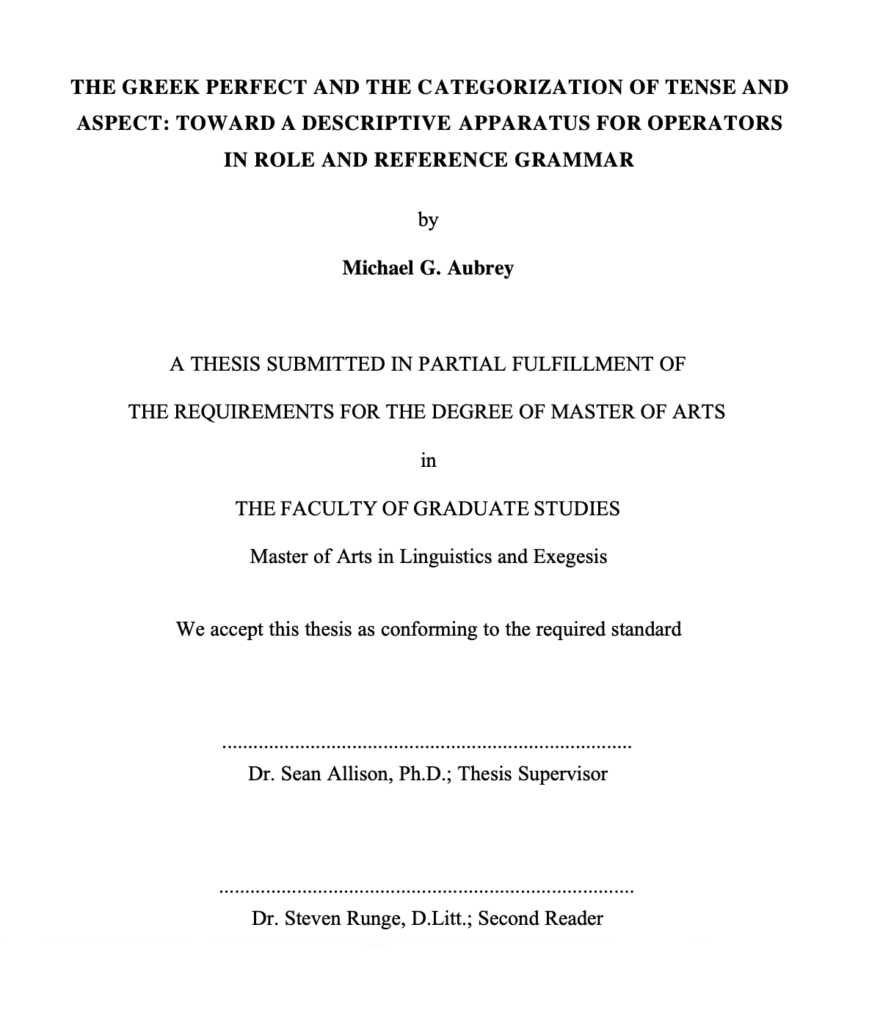
Mike has also posted two reflections on his blog that you will find helpful as you read his thesis. Here’s what he says about their value:
If you’re a Greek student/scholar. I would encourage you to read the two posts dedicated to discussing my thesis. This is because it’s not a work that’s oriented toward biblical scholars [or] to classicists. It’s a work by a linguist for linguists. The two posts I’ve put up […] on my blog are designed to provide some orientation for people whose primary interest is Greek rather than linguistics proper.
Here are links to the two discussions on his blog:
Part I: Challenges in language analysis: thesis prefatory material
Part II: Thesis Prefatory Material: A Narrative Account
Abstract
Here’s the abstract that Mike included on Academia.edu:
This thesis attempts to expand the theoretical and methodological basis for operators within Role and Reference Grammar for purposes of language description, using the Greek perfect as a test case. This requires first examining the current theoretical and methodological approach to tense and aspect in RRG and its strengths and weaknesses. Here I demonstrate that while some areas of RRG have a well-developed and robust set of theoretical and descriptive tools for language description, operators such as tense and aspect are distinctly lacking in this regard. To that end, I propose a model for tense and aspect operators that attempts to fill in the gaps that exist in RRG while also maintaining the integrity and spirit of the linguistic theory. This involves three steps. I begin with a survey of the broader typological literature on tense and aspect in order to establish a set of morphosyntactic tests for the evaluation and categorization of operators. This is followed by an application of the proposed morphosyntactic tests to a particular grammatical problem: the Greek Perfect in order to evaluate the effectiveness of the tests. I then concluded with a synthetic model for tense and aspect operators that both satisfies the theoretical and typological claims of the broader literature and also validates the existing structure of the Role and Reference Grammar framework, thereby furthering the goals of RRG as a useful theoretical model for language description.
The Greek Perfect
While the Greek perfect has been the subject of numerous treatises, it has received less attention that other forms of the verb in treatments of aspect. Mike’s thesis enables Role and Reference Grammar to address this deficit.
I encourage you to take the time to read it along with the posts on his blog that address it.
μακαριοῦσίν με πᾶσαι αἱ γενεαί A first century Speech Act

Originally published December 17, 2014: μακαριοῦσίν με πᾶσαι αἱ γενεαί
I had the privilege this Sunday of hearing a spectacular sermon by Rev. Stephanie Ford on the Magnificat. When the text was read before the sermon I noticed something that raised for me a question about translation and cultural assumptions.
The translation being read rendered Luke 1:48 as
God has looked with favor on the lowliness of his servant.
Surely, from now on all generations will call me blessed.
It is the second of these lines that concerns me. The Greek text of that second line reads:
ἰδοὺ γὰρ ἀπὸ τοῦ νῦν μακαριοῦσίν με πᾶσαι αἱ γενεαί
Does the verb μακαρίζω really mean “call blessed” here? In the ancient world one did not “call” someone blessed, but simply blessed that person. It was a speech act. The act of affirming a person or making a positive statement about a person’s future was to bless that person (μακαρίζω).
The interpretive difference this raises has to do with who is doing the blessing, who is performing the speech act. To translate μακαρίζω as “call [someone] blessed” suggests that it is someone other than the speaker who does the blessing. The speaker is simply reporting the fact of “blessedness.” In both Classical and Hellenistic Greek, though, the subject of μακαρίζω is the person doing the blessing, not someone else reporting about it.
This issue did not come up in the sermon, which addressed more pressing matters and related the Magnificat fabulously to issues of justice that still should concern us in the 21st century. I apologize to Rev. Ford for being distracted by the Greek text! Her sermon was excellent and blessed.
Punctuation in Ancient Greek Texts, Part III (Quotations)
Originally published on January 6, 2013
This morning I heard Peter Carman preach on Matthew 2:1-12. He did a super job, striking a great balance between scholarship and pastoral guidance.
As the scriptural text was being read aloud in English, I followed along in my Greek text. [Yes. I am one of those geeks who takes the Greek text to church. I don’t use it to intimidate other worshipers but because I find reading the Greek texts to be a meaningful experience.] As I was reading this text, it hit me that it’s a great example of the problem posed by the lack of clear indication of where quotes begin and end in Ancient Greek.
While it’s usually very easy to see where a quote begins, finding the end of the quote is much more challenging because there was no punctuation, and no grammatical convention, to indicate this. The particular point at which the issue appears in this text is in the priests’ and scribes’ response to Herod when he asks them about where the Christ will be born.
Ηρῴδης . . . συναγαγὼν πάντας τοὺς ἀρχιερεῖς καὶ γραμματεῖς τοῦ λαοῦ ἐπυνθάνετο παρ᾿ αὐτῶν ποῦ ὁ χριστὸς γεννᾶται (verses 3 and 4).
Herod . . . gathering all the high priests and scribes of the people, inquired of them concerning where the Christ would be born.
The clause introducing their response is quite clear:
οἱ δὲ εἶπαν αὐτῷ·. . .
And they said to him: . . .
So it’s not hard to find the beginning of the quote. Where we decide the quote ends, though, has a significant impact on the meaning of the passage. The NRSV, NIV, NET Bible, and TEV all use quotation marks to have the response include all of the following:
ἐν Βηθλέεμ τῆς Ἰουδαίας· οὕτως γὰρ γέγραπται διὰ τοῦ προφήτου· 6 καὶ σὺ Βηθλέεμ, γῆ Ἰούδα, οὐδαμῶς ἐλαχίστη εἶ ἐν τοῖς ἡγεμόσιν Ἰούδα· ἐκ σοῦ γὰρ ἐξελεύσεται ἡγούμενος, ὅστις ποιμανεῖ τὸν λαόν μου τὸν Ἰσραήλ. (verses 5 and 6)
In Bethlehem of Judea, for thus it has been written by the prophet: ‘And you, Bethlehem, in the land of Judah, are by no means least among the rulers of Judah, for from you will come a ruler who is to shepherd my people Israel.”
This interpretive decision is perfectly reasonable, of course, but it is not the only one possible, and it does have significance for what Matthew intended. It asserts that the chief priests and scribes quoted scripture to Herod. While there is no clear reason to think they wouldn’t do this, it’s also not clear that Matthew meant us to understand the text in this way.
Let’s consider another option that is equally well supported by the the text. Suppose Matthew meant only that they answered, ἐν Βηθλέεμ τῆς Ἰουδαίας (in Bethlehem of Judea).
Keep in mind that the raised dot in the printed text further above is an editor’s decision based on evidence that first appeared in the text much later than its date of composition. A period is an equally reasonable interpretation of that same evidence.
If the author of this text intended the quote to include nothing more than ἐν Βηθλέεμ τῆς Ἰουδαίας, then the rest of this section would be his own attempt to explain why they gave this answer.
οὕτως γὰρ γέγραπται διὰ τοῦ προφήτου· 6 καὶ σὺ Βηθλέεμ, γῆ Ἰούδα, οὐδαμῶς ἐλαχίστη εἶ ἐν τοῖς ἡγεμόσιν Ἰούδα· ἐκ σοῦ γὰρ ἐξελεύσεται ἡγούμενος, ὅστις ποιμανεῖ τὸν λαόν μου τὸν Ἰσραήλ.
For thus it has been written by the prophet: “And you, Bethlehem, in the land of Judah, are by no means least among the rulers of Judah; for from you shall come a ruler who is to shepherd my people Israel.”
In this reading of the text, the scriptural quote does not represent something the high priests and scribes said to Herod, but something the author quoted to his readers to show the significance of the answer given by the high priests and scribes to Herod’s question.
I apologize to Peter for thinking about this while he was delivering his insightful sermon this morning. While he didn’t discuss the punctuation of the text, he did make me think a lot about the text’s significance for today’s church. For that I thank him seriously.
Here’s a little reflection on why we should care about the punctuation:
Punctuation matters. When I mentioned this issue to my 16-year-old daughter earlier this afternoon, she responded, “Of course punctuation matters. ‘Let’s eat, Grandma’ doesn’t mean the same as ‘Let’s eat Grandma.'” She’s right, of course. It matters.
For a competent reader of Ancient Greek to fail to question the punctuation in our printed editions of the Ancient Greek texts is an abdication of a significant part of our responsibility. If we don’t struggle with the punctuation, we are simply handing that responsibility off to the editors of those texts. While that is a reasonable thing for students early in the study of the language to do, it is not a reasonable thing for accomplished readers to do. Question the punctuation. Struggle with it. Ask how the text would change if we punctuated it differently. What options are reasonable? Which ones are not? This is a part of what it means to read seriously.
Here are some other posts dealing with the lack of punctuation in Ancient Greek:
There is also one tangentially related topic that arose out of this discussion earlier:
Happy reading!
Important! [Added Jan. 19, 2015]:
While the earliest manuscripts of the biblical texts did not contain punctuation, it is usually clear to a competent reader of Ancient Greek where the punctuation belongs.
It is a serious mistake to assume that the absence of punctuation in those manuscripts means a person who does not read Greek is free to choose where to put the punctuation in an English translation. To make decisions about where the punctuation belongs, it is necessary to read Ancient Greek very well. Many options that would seem to be available in an English text are ruled out by the structure of the Greek text.
Punctuation in Ancient Greek Texts, Part II
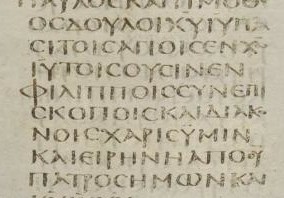
Here is a good example of what I had to say in my last post about the lack of punctuation in Ancient Greek, including the absence of spaces between words. The image is from Codex Sinaiticus, Philippians 1:1-2.
Here is the same text with spaces added between the words:
ΠΑΥΛΟΣ ΚΑΙ ΤΙΜΟΘΕΟΣ ΔΟΥΛΟΙ ΧΥ ΙΥ ΠΑΣΙΝ ΤΟΙΣ ΑΓΙΟΙΣ ΕΝ ΧΥ ΙΥ ΤΟΙΣ ΟΥΣΙΝ ΕΝ ΦΙΛΙΠΠΟΙΣ ΣΥΝ ΕΠΙΣΚΟΠΟΙΣ ΚΑΙ ΔΙΑΚΟΝΟΙΣ ΧΑΡΙΣ ΥΜΙΝ ΚΑΙ ΕΙΡΗΝΥ ΑΠΟ ΘΥ ΠΑΤΡΟΣ ΗΜΩΝ ΚΑΙ ΚΥ ΙΥ ΧΥ
Notice in addition to the lack of punctuation and spacing, the regular use of abbreviations for the words God (ΘΕΟΥ = ΘΥ), Lord (ΚΥΡΙΟΥ = ΚΥ), Jesus (ΙΗΣΟΥ = ΙΥ), and Christ (ΧΡΙΣΤΟΥ = ΧΥ). In Codex Sinaiticus as in all of the early manuscripts, such abbreviations are marked by a macron (¯) over the letters. I was not able to do that when I typed out the version with the spaces above. By including both the first and last letters in the abbreviation, the CASE of the words in question is clear (Genitive in this context for all of them), so even the abbreviations present minimal difficulty for a reasonably fluent reader of Hellenistic Greek.
To see the earlier discussion, go here:
On January 6, 2013 I added a third post on the topic of punctuation:
Important! [Added Jan. 19, 2015]
While the earliest manuscripts of the biblical texts did not contain punctuation, it is usually clear to a competent reader of Ancient Greek where the punctuation belongs.
It is a serious mistake to assume that the absence of punctuation in those manuscripts means a person who does not read Greek is free to choose where to put the punctuation in an English translation. To make decisions about where the punctuation belongs it is necessary to read Ancient Greek very well. Many options that would seem to be available in an English text are ruled out by the structure of the Greek text.
Usage of καί
Originally published May 15, 2012: Usage of καί
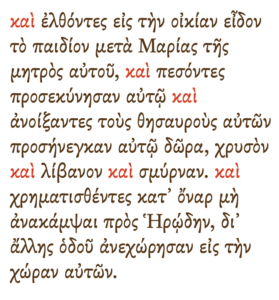 Earlier today, Eric Rasmusen posted the following comment in the Punctuation in Ancient Greek Texts discussion. While his comment is related to that topic, it raises a question more specific to the usage of καί, and I would like to invite other comments more particular to the use of that conjunction than to punctuation.
Here’s what Eric had to say:
I don’t know Greek. I have a question about Biblical Greek, which often strikes me as ugly in literal translation. I was just reading Colossians in English and wondered whether most of the “and”‘s in it ought to be translated by periods. In other words: is the Greek word kai actually mean NEW SENTENCE?
3:13 Forbearing one another, and forgiving one another, if any man have aquarrel against any: even as Christ forgave you, so also do ye.
3:14 And above all these things put on charity, which is the bond of perfectness.
3:15 And let the peace of God rule in your hearts, to the which also ye are called in one body; and be ye thankful.
And here’s my response, to which you can feel free to add:
I agree that overly literal translations sound “ugly.” That’s because they try to make English sound like Greek, and that’s just not normal English usage!
As to the meaning of καί…
No. Καί is not equivalent to a verbal punctuation mark. It can be used in all of the ways that the English word “and” can be in English, plus a few others. I’ll stick to ways that have a parallel in English to make the discussion below easy to follow.
Usage of καί to link words
Καί can be used to link two or more simple words in a list:
χρυσὸν καὶ λίβανον καὶ σμύρναν
gold and frankincense and myrrh (Matthew 2:11)
Σίμωνος καὶ Ἀνδρέου
Simon and Andrew (Mark 1:29)
To link phrases
Καί can be used to link two or more phrases:
γῆ Ζαβουλὼν καὶ γῆ Νεφθαλίμ
The land of Zebulun and the land of Naphtali (Matthew 4:15)
To link clauses
Καί can be used to link entire clauses:
τέξεται. . . υἱόν, καὶ καλέσεις τὸ ὄνομα αὐτοῦ Ἰησοῦν
She will bear a son, and you will name him “Jesus” (Matthew 1:21)
Usage of “and” in English differs from the usage of καί in Greek.
In English we often omit “and” when it would sound repetitive. For example, in the first example above (Matthew 2:11), a more natural English translation would be “gold, frankincense, and myrrh” rather than “gold and frankincense and myrrh.” In a list of three or more items, we tend to use “and” only between the last two in Engli sh. In ancient Greek texts, however, it is quite common to find καί between each set of items in the list. While including “and” in all of these places in the English translation would sound “ugly” as you put it, including και´in Greek sounds quite normal.
Because Ancient Greek had a much more developed system of grammatical endings (for verbs, nouns, pronouns, adjectives, etc.), it was possible to write sentences that were considerably longer than what would be understandable in English. Often the parts of such long sentences were held together by conjunctions like καί. There were, of course, many other such conjunctions, but καί was among the most common. Overly literal translations attempt to make English work like Greek and include all of those conjunctions rather than breaking the long sentences down into the smaller units that English usage requires. This results both in “ugly” sounding sentences and a significant loss of comprehensibility.
Note added February 14, 2022:
For more on punctuation in Ancient Greek, see these posts:
- Punctuation in Ancient Greek, Part I
- Punctuation in Ancient Greek, Part II
- Punctuation in Ancient Greek, Part III (Quotations)